
Netflix’s “How to Change Your Mind” – The documentary that changed my life and led me to freedom from 30 years of alcohol addiction
In early 2023, I pressed play on Netflix’s “How to Change Your Mind.” I wasn’t looking for a miracle cure. I wasn’t even sure what I was looking for. But within hours of watching this groundbreaking documentary about how to change your mind ayahuasca and other psychedelics, something shifted—a tiny spark of hope I hadn’t felt in years.
I’d been struggling with alcohol addiction since I was 13 years old. Thirty years of trying and failing to quit, of shame, of desperation. The strange thing is, I’d never touched any other drug in my life—not even weed. I’d been to Amsterdam 5 or 6 times and never once smoked a joint. I was always scared of drugs, of addiction, of losing control.
But alcohol? That was different. That was “normal.” That was what everyone did. Except for me, it wasn’t normal anymore. It hadn’t been normal since I was a teenager, when I first discovered that drinking could make the pain go away—at least temporarily.
The Irony: I was terrified of ayahuasca because it was a “drug,” but I was destroying myself with alcohol—a drug that’s killed more people than all psychedelics combined. Fear is funny that way. It protects us from the wrong things.
That documentary—and specifically one person’s story about healing from severe OCD—made me think: maybe there’s another way. Understanding how to change your mind ayahuasca could offer helped me realize that maybe plant medicine could help me break free from a pattern my brain had been running for three decades.
Within days—not months—I’d done enough research on the “how to change your mind” ayahuasca connection and booked my first ceremony at a retreat in Alcover, Spain. This is my honest review of the documentary that started that journey, what it covers about ayahuasca, what it misses, and what happened when I took the leap.
📑 In This Review:
- Documentary Overview & Structure
- “How to Change Your Mind” Ayahuasca Content
- Episode 1: LSD (The History)
- Episode 2: Psilocybin (The OCD Story That Changed Everything)
- Episode 3: MDMA (PTSD Treatment)
- Episode 4: Mescaline (Indigenous Medicine)
- Ayahuasca Coverage Throughout the Series
- What the Documentary Gets Right
- What’s Missing (Critical Gaps)
- My Decision: From Desperation to Hope
- Should You Watch It?
📺 “How to Change Your Mind” – Documentary Overview
“How to Change Your Mind” is a four-part Netflix documentary series released in July 2022, based on Michael Pollan’s bestselling 2018 book of the same name. Directed by Alison Ellwood and Lucy Walker, the series explores the renaissance of psychedelic research and its potential to treat mental health conditions that traditional medicine has failed to address.
Each episode focuses on a different psychedelic substance, combining scientific research, historical context, personal testimonials, and Pollan’s own experiences with these medicines. The production features interviews with leading researchers from Johns Hopkins University, Imperial College London, MAPS (Multidisciplinary Association for Psychedelic Studies), and other respected institutions.
Series Structure:
- Episode 1: LSD – 55 minutes
- Episode 2: Psilocybin – 58 minutes
- Episode 3: MDMA – 52 minutes
- Episode 4: Mescaline – 55 minutes
While ayahuasca doesn’t have its own dedicated episode, it appears throughout the series—particularly in Pollan’s personal journey and in discussions about DMT (the active compound in ayahuasca). The series treats ayahuasca with respect, acknowledging its indigenous roots and its growing role in Western psychedelic therapy.
“How to Change Your Mind” Ayahuasca Content: What You Need to Know
If you’re searching for information about “how to change your mind ayahuasca”, you should know that while Michael Pollan’s Netflix documentary doesn’t have a dedicated ayahuasca episode, the series covers ayahuasca extensively throughout multiple episodes—particularly in relation to DMT research and Pollan’s own personal ayahuasca ceremony experience.
The “how to change your mind” ayahuasca connection is woven throughout the series, especially in Episode 2 (Psilocybin), which discusses psychedelic therapy for conditions like OCD, depression, and addiction—the same conditions that bring many people to ayahuasca. This episode was what convinced me to try ayahuasca after 30 years of alcohol addiction.
For anyone searching “how to change your mind ayahuasca” looking for practical guidance, the documentary provides the scientific foundation and inspiration, but you’ll need additional resources (like this guide) to understand how to actually find a safe retreat, prepare properly, and integrate the experience.
💡 Quick Answer: Episode 2 (Psilocybin) is the most relevant for understanding the “how to change your mind ayahuasca” relationship. It covers the neuroscience, healing stories, and therapeutic potential that directly apply to ayahuasca ceremonies.
🌈 Episode 1: LSD – The Psychedelic Pioneer
The first episode traces LSD’s remarkable journey from accidental discovery to therapeutic tool to cultural phenomenon to Schedule I drug—and back to legitimate medicine again.
What Episode 1 Covers:
The Discovery
Albert Hofmann’s accidental discovery of LSD in 1943 while working for Sandoz pharmaceutical company in Switzerland. His famous “bicycle day” trip home after deliberately ingesting the substance to test its effects.
The Therapeutic Era (1950s-1960s)
How LSD was initially embraced by psychiatry as a breakthrough treatment for alcoholism, depression, and anxiety. Over 40,000 patients were treated with LSD in clinical settings during this period, with promising results.
The Counterculture & Backlash
Timothy Leary’s “turn on, tune in, drop out” movement, the association with 1960s counterculture, and the subsequent moral panic that led to LSD being classified as a Schedule I controlled substance in 1968, effectively ending all research.
The Modern Renaissance
How researchers like Dr. Robin Carhart-Harris at Imperial College London are using brain imaging to understand what LSD actually does to consciousness, revealing it as a tool for “resetting” rigid thought patterns.
Key Scientific Insights:
- The Default Mode Network – LSD temporarily disrupts this brain network responsible for our sense of self and ego, allowing new neural connections to form
- Neuroplasticity – Psychedelics create a temporary state of enhanced brain plasticity, making it possible to form new patterns and break old ones
- Set and Setting – The importance of mindset and environment in determining the quality and outcome of a psychedelic experience
Pollan himself tries LSD in a controlled, therapeutic setting and describes the experience as opening a door to a different way of seeing the world—not as escapism, but as a tool for self-understanding.
🍄 Episode 2: Psilocybin – The Story That Changed My Life
This is the episode that hooked me. Episode 2 focuses on psilocybin (the active compound in magic mushrooms) and its remarkable success in treating depression, anxiety, and obsessive-compulsive disorder.
What Episode 2 Covers:
Johns Hopkins Research
Dr. Roland Griffiths’ groundbreaking studies on psilocybin for depression and end-of-life anxiety in cancer patients. His research showed that a single high-dose psilocybin session could produce lasting improvements in mood and life satisfaction for months or even years.
Treatment-Resistant Depression
Studies from Imperial College London showing psilocybin’s effectiveness for people who hadn’t responded to traditional antidepressants—people who’d tried everything and were out of options.
The OCD Story 🌳
This is what changed everything for me. The documentary features someone with severe obsessive-compulsive disorder—someone trapped in endless loops of checking things. They described the agony of constantly checking the stove, the locks, over and over again. The anxiety that never stopped.
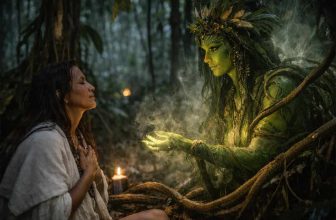
During their psilocybin (or possibly ayahuasca—I don’t remember exactly which) ceremony, they experienced something profound: a kind of death and rebirth. They described becoming a tree, feeling their roots go deep into the earth, feeling connected to everything. It was terrifying, but also liberating.
After that experience, over time, the OCD symptoms began to fade. Not immediately—but gradually, the compulsions lost their grip. They were healing.
💭 Why This Story Hit Me So Hard: I watched someone break free from a pattern their brain had been running for years—a pattern that traditional therapy and medication couldn’t touch. If plant medicine could help them escape that loop of checking the stove over and over, maybe it could help me escape my loop of reaching for alcohol over and over. Both are patterns we can’t seem to stop, no matter how much we want to. That single story gave me hope I hadn’t felt in thirty years.
Scientific Research Featured in “How to Change Your Mind”
The documentary features groundbreaking research from leading institutions studying psychedelics including ayahuasca:
- Johns Hopkins Center for Psychedelic Research – Leading psilocybin and psychedelic therapy studies
- Imperial College London Centre for Psychedelic Research – Brain imaging studies on psychedelics
- MAPS (Multidisciplinary Association for Psychedelic Studies) – MDMA and psychedelic therapy research
- National Institutes of Health – Ayahuasca Research – Scientific studies on ayahuasca for addiction treatment
Pollan’s Psilocybin Experience:
Pollan describes his own psilocybin journey with remarkable honesty. He talks about:
- The anxiety before taking it
- The overwhelming beauty and interconnectedness he felt
- Encountering what felt like his own mortality
- The lasting sense of gratitude and perspective shift afterward
He doesn’t portray it as blissful or easy—he’s honest about the difficulty of surrendering control. But he also conveys the profound sense of meaning and connection these experiences can provide.
💚 Episode 3: MDMA – Healing Trauma
Episode 3 focuses on MDMA (commonly known as ecstasy or molly) and its breakthrough potential for treating PTSD, particularly in veterans and sexual assault survivors.
What Episode 3 Covers:
MAPS Research
Rick Doblin and MAPS (Multidisciplinary Association for Psychedelic Studies) have spent decades researching MDMA-assisted psychotherapy for PTSD. Their Phase 3 clinical trials showed remarkable results: 67% of participants no longer met criteria for PTSD after just three MDMA sessions combined with therapy.
How MDMA Works for Trauma
MDMA creates a window of neuroplasticity while reducing fear and increasing trust. This allows people to process traumatic memories that are normally too overwhelming to face. It’s not about feeling good—it’s about feeling safe enough to do the difficult therapeutic work.
Real Stories of Healing
The episode features veterans who’d been to war, experienced unspeakable trauma, and tried every conventional treatment without success. After MDMA-assisted therapy, many experienced relief for the first time in decades. The documentary shows their transformations—not instant miracles, but genuine, lasting healing.
Key Insights:
- MDMA is not the same as the street drug “ecstasy” (which is often cut with dangerous substances)
- The therapy component is essential—MDMA alone isn’t the treatment
- Set, setting, and trained therapists are critical for safety and efficacy
- MDMA is on track for FDA approval for PTSD treatment
🌵 Episode 4: Mescaline – The Indigenous Root
The final episode explores mescaline (from peyote and San Pedro cacti) and serves as a reminder that psychedelic medicine isn’t a new Western invention—it’s rooted in thousands of years of indigenous practice.
What Episode 4 Covers:
Indigenous Traditions
The Native American Church’s use of peyote in religious ceremonies, a practice that predates Western colonization by thousands of years. The documentary treats these traditions with deep respect, acknowledging that Western science is only beginning to understand what indigenous peoples have known for millennia.
Cultural Appropriation vs. Access
The episode thoughtfully addresses the tension between protecting sacred indigenous practices and making these medicines available to people who need them. It doesn’t have easy answers, but it asks important questions.
The Future of Psychedelic Medicine
The documentary concludes by examining where psychedelic therapy is headed—toward FDA approval, medicalization, accessibility, and the ongoing challenge of honoring indigenous roots while making these medicines available to those who need them.
Connection to Ayahuasca:
This episode resonates deeply with ayahuasca because both are indigenous plant medicines being adopted by Western seekers. The questions raised about respect, reciprocity, and cultural appropriation apply equally to ayahuasca tourism in South America.
“How to Change Your Mind” Ayahuasca Coverage Throughout the Netflix Series
Understanding the “how to change your mind ayahuasca” relationship is key to appreciating what the documentary offers. While “How to Change Your Mind” doesn’t have a dedicated ayahuasca episode, the medicine appears throughout the series, particularly in discussions about DMT (dimethyltryptamine), the primary psychoactive compound in ayahuasca.
Many viewers searching for “how to change your mind ayahuasca” information are specifically interested in Episode 2 (Psilocybin), which features the OCD healing story that inspired me, and Episode 4 (Mescaline), which discusses indigenous plant medicine traditions—directly relevant to ayahuasca’s Amazonian roots.
Where Ayahuasca Appears:
Pollan’s Personal Experience
Michael Pollan describes his ayahuasca ceremony as one of the most profound experiences of his life. He talks about the intensity of the purge, the visions, the encounter with what felt like an intelligent presence or teacher, and the lasting impact on his perspective.
DMT Research
The series covers Dr. Rick Strassman’s DMT research from the 1990s at the University of New Mexico, where participants described encounters with entities, geometric patterns, and experiences that felt “more real than real.” This research helps explain what happens during ayahuasca ceremonies.
Indigenous Context
The documentary acknowledges that ayahuasca has been used by indigenous Amazonian peoples for thousands of years as both medicine and spiritual sacrament. It treats this tradition with respect rather than viewing it through a purely Western scientific lens.
What the Documentary Explains About Ayahuasca:
- The Science: How DMT affects the brain’s default mode network and serotonin receptors
- The Experience: Visions, purging, ego dissolution, encounters with “entities” or teachers
- The Potential: Treating depression, addiction, PTSD, and existential anxiety
- The Difficulty: Ayahuasca ceremonies are challenging, not recreational
- Set and Setting: The crucial importance of a safe, supportive environment
📌 Important Note: While the documentary provides excellent context about ayahuasca’s effects and potential, it doesn’t explain how to actually find a safe retreat or what to look for in a facilitator. This is a critical gap that I had to fill through additional research.
✅ What “How to Change Your Mind” Gets Right
1. Scientific Credibility Without Hype
The documentary presents legitimate peer-reviewed research from respected institutions. It’s not sensationalizing psychedelics or making wild claims—it’s showing actual data, brain scans, clinical trials, and measured outcomes. This scientific rigor makes it credible to skeptics while still honoring the mystical aspects of these experiences.
2. Real People, Real Healing
The documentary doesn’t rely on theoretical benefits—it shows actual people who’d struggled for years or decades with depression, PTSD, OCD, addiction, finding genuine relief. These aren’t actors. These are people like me, like you, who were desperate and out of options.
3. Honest About Difficulty and Risks
Unlike many psychedelic documentaries that romanticize the experience, “How to Change Your Mind” is refreshingly honest about how challenging these journeys can be. Pollan describes fear, discomfort, nausea, ego death. The documentary makes it clear this isn’t a recreational escape—it’s serious medicine that demands respect.
4. Respectful to Indigenous Traditions
The series acknowledges that these aren’t new discoveries—Western science is only beginning to understand what indigenous peoples have known for thousands of years. It addresses cultural appropriation concerns thoughtfully and treats indigenous knowledge with genuine respect.
5. Balances Science and Mystery
The documentary doesn’t try to reduce psychedelic experiences to pure neurochemistry. It acknowledges that while we can measure brain changes, something ineffable happens in these experiences—something that feels sacred, meaningful, and beyond current scientific explanation. This balance honors both perspectives.
⚠️ Critical Information the Documentary Doesn’t Cover
As powerful as “How to Change Your Mind” is, there are essential practical details it doesn’t address—details I had to research separately:
1. How to Actually Find a Safe Retreat
The documentary shows the science and the healing, but it doesn’t explain how to find a legitimate ayahuasca retreat. There are hundreds of centers operating globally, and quality varies dramatically:
- Some facilitators are experienced and caring; others are inexperienced or exploitative
- Group sizes matter enormously (6-12 people max vs. 20-30+ people)
- Medical screening is critical but not universal
- Emergency protocols vary widely
- Integration support ranges from excellent to nonexistent
👉 My resource: Complete Safety Checklist for Choosing Ayahuasca Retreats
2. Medical Contraindications
The documentary mentions ayahuasca isn’t for everyone, but doesn’t detail specific medical risks. Ayahuasca can be life-threatening for people taking:
- SSRIs or other antidepressants (risk of serotonin syndrome)
- MAOIs
- Certain heart medications
- Stimulants or other substances
It’s also risky for people with severe mental health conditions, heart problems, or pregnancy.
🚨 Critical: ANY legitimate retreat will require detailed medical screening. If they don’t ask about medications and health conditions, that’s a massive red flag. Always consult a doctor before considering ayahuasca.
3. Integration is the Hard Part
The documentary shows the ceremony and immediate insights, but doesn’t adequately address the months and years of integration work that follow. The ceremony opens doors—but you have to walk through them.
4. Cost, Logistics, and Preparation
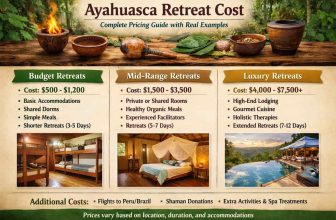
The series doesn’t cover practical details like typical costs ($800-$4,000), the ayahuasca diet (2 weeks preparation), travel considerations, or how long to plan for integration afterward.
🌿 My Decision: From Desperation to Hope
After finishing the documentary, I spent a few days researching. Not months—just days. That OCD healing story had grabbed me and wouldn’t let go. I needed to know if this could help me escape my own loop.
My First Concern: Would Ayahuasca Create Another Addiction?
After watching the documentary, the first thing I researched wasn’t “where to find a retreat.” It was: Does ayahuasca cause addiction?
I was terrified of jumping from one problem to another—of escaping alcohol only to become dependent on something else. It’s like trying to climb out of quicksand and grabbing a rope that turns out to be a snake.
What I found in my research was reassuring: ayahuasca is not physiologically addictive. In fact, studies show it may help treat addiction. The experience itself is often so difficult that people respect it rather than seek it recreationally—they don’t want to repeat it frivolously.
That research, combined with the healing story I’d seen in the documentary, gave me enough hope to keep exploring.
Finding the Retreat: The Power of Honest Reviews
I found a blog—similar to what I’m creating now—written by someone who’d personally attended and reviewed ayahuasca retreats. That blog helped me understand what to look for: small groups, experienced facilitators, proper medical screening, clear safety protocols.
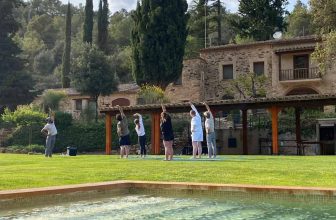
Through that blog, I found a retreat in Alcover, Spain. I chose Spain (not Peru or South America) for my first ceremony because:
- Closer to home – Less overwhelming for a first experience
- English-speaking facilitators – Critical for feeling safe and understood
- Modern safety protocols – Medical screening, emergency access
- European standards – Professional approach to retreat management
Meeting Isabella: The Facilitator Who Changed Everything
The facilitator who guided my first ceremony was a woman named Isabella. She’d been working with ayahuasca for over 15 years and truly embodied what the documentary talked about—holding space with deep respect for the medicine and genuine care for each person’s healing.
Our group was small—just 6 people. Before the ceremony, we had two full days of preparation. Isabella worked with each of us, understanding our intentions, medical history, and what we were seeking to heal.
Now I understand why that preparation time was so crucial. You don’t just walk into an ayahuasca ceremony unprepared—you need time to set intentions, understand what to expect, build trust with your facilitator, and prepare mentally and emotionally. Those two days of preparation made all the difference.
During the ceremony itself, Isabella was fully present, attending to each person individually throughout the entire night. I was incredibly fortunate. Isabella genuinely put healing above profit. She charged far less than most centers, provided exceptional support, and continued to offer integration guidance for months afterward.
I can honestly say that retreat wasn’t profitable for her in financial terms—she was doing this work because she believed in it, not to get rich.
📌 Note: Isabella no longer offers ayahuasca retreats. She now works with psilocybin therapy and is based in Amsterdam. If you’d like to connect with her for psilocybin work, you can reach out through her website.
💡 Key Lesson: The quality of your facilitator matters MORE than anything else—more than the location, the price, the “authenticity,” or the marketing. A good facilitator like Isabella can hold space for profound healing. A bad one can cause serious harm. And proper preparation before the ceremony—those two days of intention-setting and mental preparation—is absolutely essential. This is what I wish the documentary emphasized more.
What Happened Next
That first ceremony in Alcover was profound. I won’t describe the experience in detail here—it feels too personal, and every person’s journey is unique. But I will say that something shifted.
The documentary had prepared me for the intensity, the fear, the difficulty of surrender. What it couldn’t prepare me for was how deeply healing it could be when done in the right setting with the right guide like Isabella, and with proper preparation beforehand.
👉 I’ll share the full story of my healing journey in a separate article: How Ayahuasca Helped Me Break Free from 30 Years of Alcohol Addiction
🎬 Should You Watch “How to Change Your Mind”?
Absolutely yes—especially if you’re struggling with addiction, depression, trauma, or anything traditional treatments haven’t helped.
✅ Watch It If You:
- Are struggling with addiction, depression, anxiety, trauma, or OCD
- Have tried traditional therapy or medications without success
- Are curious about ayahuasca but know nothing about it
- Want to understand the science behind psychedelic therapy
- Appreciate balanced, well-researched journalism
- Are skeptical and need credible scientific evidence
- Need hope that healing is possible
⚠️ But Don’t Stop There:
The documentary is an excellent introduction, but if you’re seriously considering ayahuasca:
- Research safety thoroughly – Learn about medical contraindications and red flags
- Find a reputable retreat – Small groups, experienced facilitators, proper screening
- Look for proper preparation – Good retreats include 2+ days of preparation before ceremony
- Take your time – Or don’t—I made my decision in days. But make sure you do your safety research
- Consult a doctor – Especially if you take any medications
- Plan for integration – The ceremony is just the beginning
💡 My Recommendation: Watch the documentary to understand WHY people seek ayahuasca. Then do focused research on HOW to do it safely before booking anything. The documentary provides context and hope—but you need practical safety guidance too.
Ready to Learn More About Safe Ayahuasca Retreats?
I created this site to be the resource I wish I’d had—honest reviews, safety information, and real experiences from someone who’s been there.
📚 Additional Resources
Other Ayahuasca and Psychedelic Documentaries Worth Watching:
- “The Last Shaman” (2017) – A man’s journey to Peru seeking ayahuasca healing for depression
- “Vine of the Soul” (2010) – Traditional Shipibo perspective on ayahuasca
- “Fantastic Fungi” (2019) – Explores psilocybin mushrooms and their healing potential
Books to Read After Watching “How to Change Your Mind”:
- “How to Change Your Mind” by Michael Pollan – The full book (much more detailed than the Netflix series)
- “The Psychedelic Explorer’s Guide” by James Fadiman – Practical preparation guide
- “The Fellowship of the River” by Joseph Tafur, MD – A Western doctor’s ayahuasca journey
Essential Guides on This Site:
❓ Frequently Asked Questions About “How to Change Your Mind”
Q: Does “How to Change Your Mind” have an ayahuasca episode?
A: While there isn’t a dedicated “how to change your mind ayahuasca” episode, ayahuasca appears throughout the series. Episode 2 (Psilocybin) is most relevant, covering the neuroscience and healing stories that apply to ayahuasca. Michael Pollan also describes his personal ayahuasca ceremony experience in multiple episodes.
Q: Is ayahuasca addictive?
A: No. Ayahuasca is not physiologically addictive and actually shows promise in treating addiction. The experience is often so challenging that people respect it rather than seek it recreationally. I was terrified of creating another addiction, but that fear was unfounded—ayahuasca helped me break free from 30 years of alcohol dependency.
Q: How long should I wait after watching “How to Change Your Mind” before trying ayahuasca?
A: There’s no fixed timeline. I made my decision within days because I found reliable resources quickly. But what matters most isn’t the timeline—it’s doing thorough safety research, checking medical contraindications, and finding a legitimate retreat with a caring facilitator like Isabella. Minimum: understand the risks and safety protocols before booking.
Q: Which episode of “How to Change Your Mind” should I watch if I’m only interested in ayahuasca?
A: Watch Episode 2 (Psilocybin) for the most relevant content—it covers the OCD healing story that changed my life, discusses DMT/ayahuasca, and explains the neuroscience that applies to all psychedelics. But honestly, all four episodes provide valuable context for understanding plant medicine.
Q: What does Michael Pollan say about ayahuasca in the documentary?
A: Michael Pollan describes his ayahuasca ceremony as one of the most profound experiences of his life. He discusses the intensity of the purge, the visions, encountering what felt like an intelligent teacher or presence, and the lasting impact on his perspective. He’s honest about how challenging and transformative it was.
Q: Did you go to Peru like Michael Pollan?
A: No, I chose Alcover, Spain for my first ceremony. I prioritized safety, communication, and professional retreat management. I’ve since experienced ceremonies in other countries, but I’m grateful I started somewhere I felt safe and supported with an exceptional facilitator like Isabella.
Q: Will ayahuasca cure my addiction like it helped you?
A: Ayahuasca is not a cure—it’s a tool that can support healing. For me, it helped me see my addiction clearly and gave me the strength to change. But I still needed ongoing support and daily commitment. The ceremony opens the door; you have to walk through it. Read my full recovery story here.
Q: Is “How to Change Your Mind” Netflix documentary accurate about ayahuasca?
A: Yes, the science and general information are accurate and backed by legitimate research from Johns Hopkins, Imperial College London, and MAPS. However, it doesn’t cover practical safety considerations, how to choose a retreat, the importance of preparation time, or medical contraindications in detail. Use it as your starting point, not your only source.
Q: Where can I watch “How to Change Your Mind”?
A: “How to Change Your Mind” is available on Netflix worldwide. It’s a 4-episode documentary series, each about 50-60 minutes long. You need a Netflix subscription to watch it.
Q: Should I read the book or watch the documentary first?
A: The Netflix documentary is more accessible and visual, making it perfect for beginners. The book “How to Change Your Mind” by Michael Pollan goes much deeper into the science, history, and personal experiences. I recommend watching the documentary first, then reading the book if you want more depth.
💭 Final Thoughts: The Documentary That Opened a Door
“How to Change Your Mind” didn’t cure my addiction. But it showed me that healing was possible, even after 30 years of struggle. It introduced me to a path I never knew existed.
That one story about the person with OCD—the death experience, the rebirth as a tree, the gradual healing—gave me enough hope to take the first step. And that first step led to research, which led to finding a blog like this one, which led to finding Isabella’s retreat in Alcover, which led to a ceremony that opened a door I’d been standing in front of my whole life.
If you searched for “how to change your mind ayahuasca” and found this review, you’re likely in the same place I was in early 2023—curious, scared, researching obsessively, wondering if this medicine could help you. The documentary provides the scientific foundation and inspiring stories. But you’ll need to do additional research on safety, medical contraindications, and how to find a reputable retreat.
If you’re watching this documentary right now, struggling with addiction or something you can’t seem to overcome, feeling desperate but also terrified—I see you. I was you. I’d never touched drugs in my life, not even weed in Amsterdam. But desperation led me to ayahuasca, and ayahuasca led me to freedom.
The “how to change your mind” ayahuasca documentary sparked my journey. The research led me to Isabella’s retreat in Alcover. And that ceremony—with proper preparation—opened a door I’d been standing in front of my whole life.
The documentary is your starting point. Do your safety research. Find the right support. Look for a facilitator who provides proper preparation time before the ceremony. And when you’re ready, take that step.
Healing is possible. You deserve to be free. And you don’t have to figure this out alone.
About the Author
I struggled with alcohol addiction for 30 years, starting when I was just 13 years old. After watching “How to Change Your Mind” in early 2023, I found the courage to try ayahuasca. Within days, I’d booked my first ceremony at a retreat in Alcover, Spain with facilitator Isabella. That experience—preceded by two crucial days of preparation—opened a door to healing I didn’t know was possible. I created this site to help others find safe, authentic retreats—the resource I wish I’d had when I started this journey.
⚠️ Medical Disclaimer: This article describes my personal experience and is for informational purposes only. I am not a medical professional, therapist, or addiction counselor. If you’re struggling with addiction or mental health issues, please work with qualified professionals. Ayahuasca can be dangerous if you have certain medical conditions or take certain medications. Always consult a doctor before considering any ayahuasca ceremony. The information in this review should not be considered medical advice.